
Proof / AppLanding
Make the promise specific. Put people beside it.
The offer moves from getting an app seen to giving it a website. The same primary button now sits beside a more specific promise and visible developer avatars.
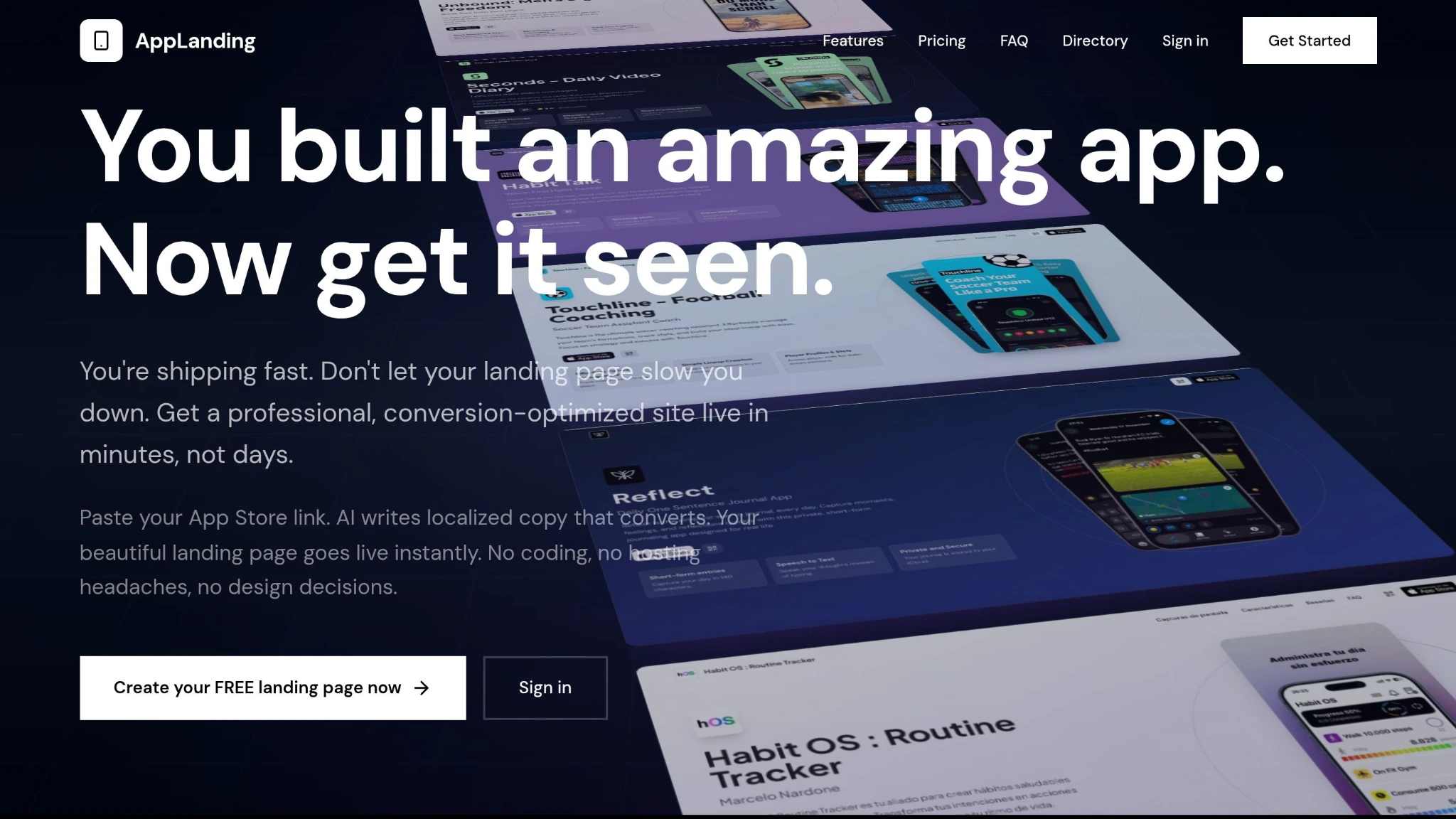
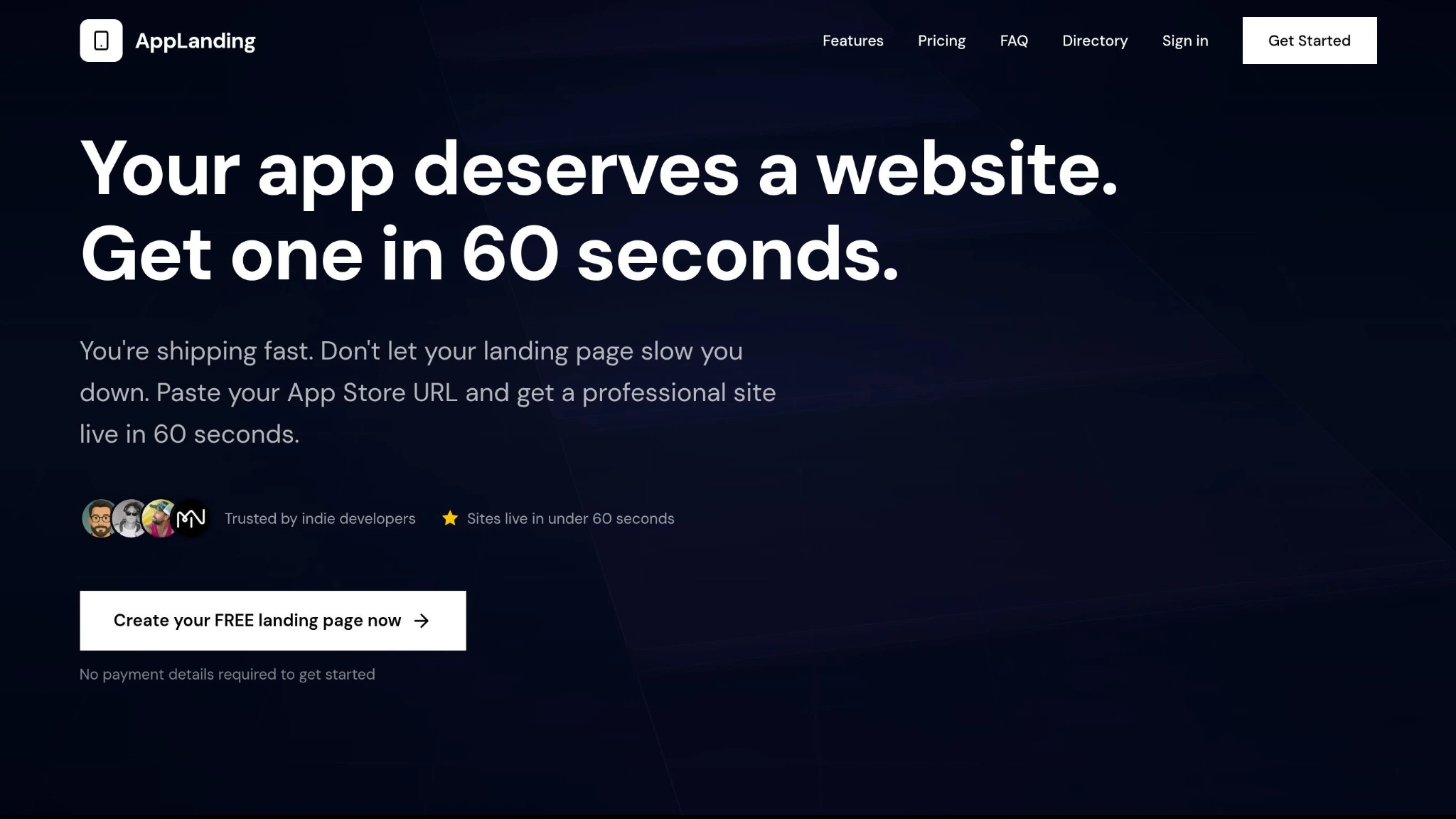
Desktop captures. Before: Feb 23, 2026. After: Feb 25, 2026. Drag to compare.
What changed
A more concrete outcome
“Your app deserves a website” names the deliverable. The next line adds a 60-second claim; this is the site’s claim, not a speed test by LandingBoost.
People near the decision
Developer avatars and a trust line appear close to the main action in the later capture. The earlier hero gives more space to the background page collage.
The action stays familiar
The primary button keeps the same wording. The visible changes are in the explanation and surrounding proof, rather than a new signup action.
What this does not prove
The earlier suggestion: Directionally aligned
Build credibility in hero section
The earlier LandingBoost recommendation was to build credibility in the hero. The later capture adds social proof, which follows that direction. There is no recorded confirmation that the recommendation caused the edit.
What to measure next. Test whether first-time visitors can name the deliverable, then compare completed page creations per eligible visit.
These February captures use a legacy score comparison. The visible page changes are usable evidence; the score delta is not a verified measure of improvement.
No verified conversion or revenue result is attached to this pair. A scan or visual match does not establish ownership, adoption, or causality.
Page scores come from LandingBoost’s earlier checker. They show how a page did on our checks, not sign-ups or revenue, and a change on a page does not prove LandingBoost caused it.